
Native to Southern Africa, all varieties of Stapelia succulents thrive in hot, dry areas with sandy soil. Bright, indirect sun or partial sun is ideal for ensuring lots of blooms and healthy green stems. Full sun, especially full afternoon sun in Florida, can turn the stems reddish-brown.
All Stapelia succulents use their large, star-shaped blooms and pungent scent to attract their primary pollinators: flies. Despite their strong aroma, they are cherished by plant lovers for their unusual flowers, heat tolerance, and ease of care.
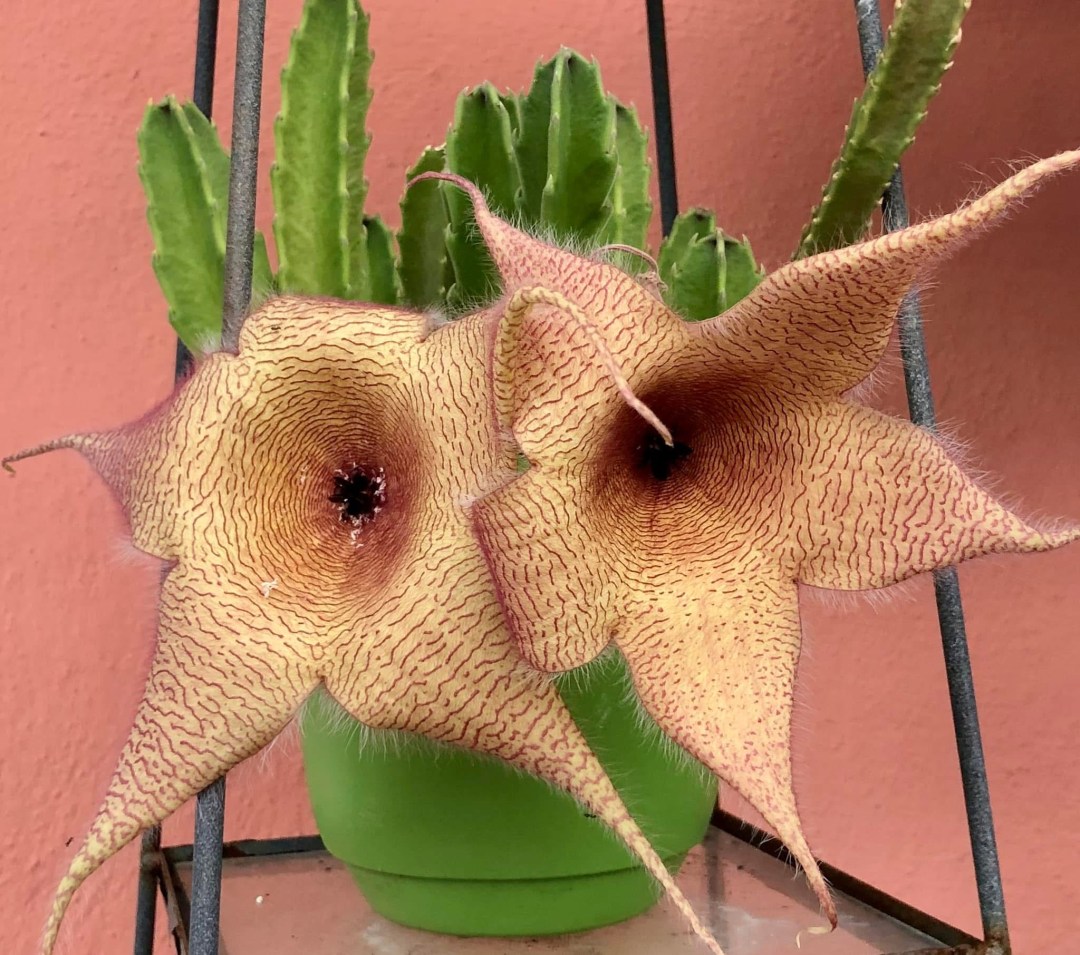
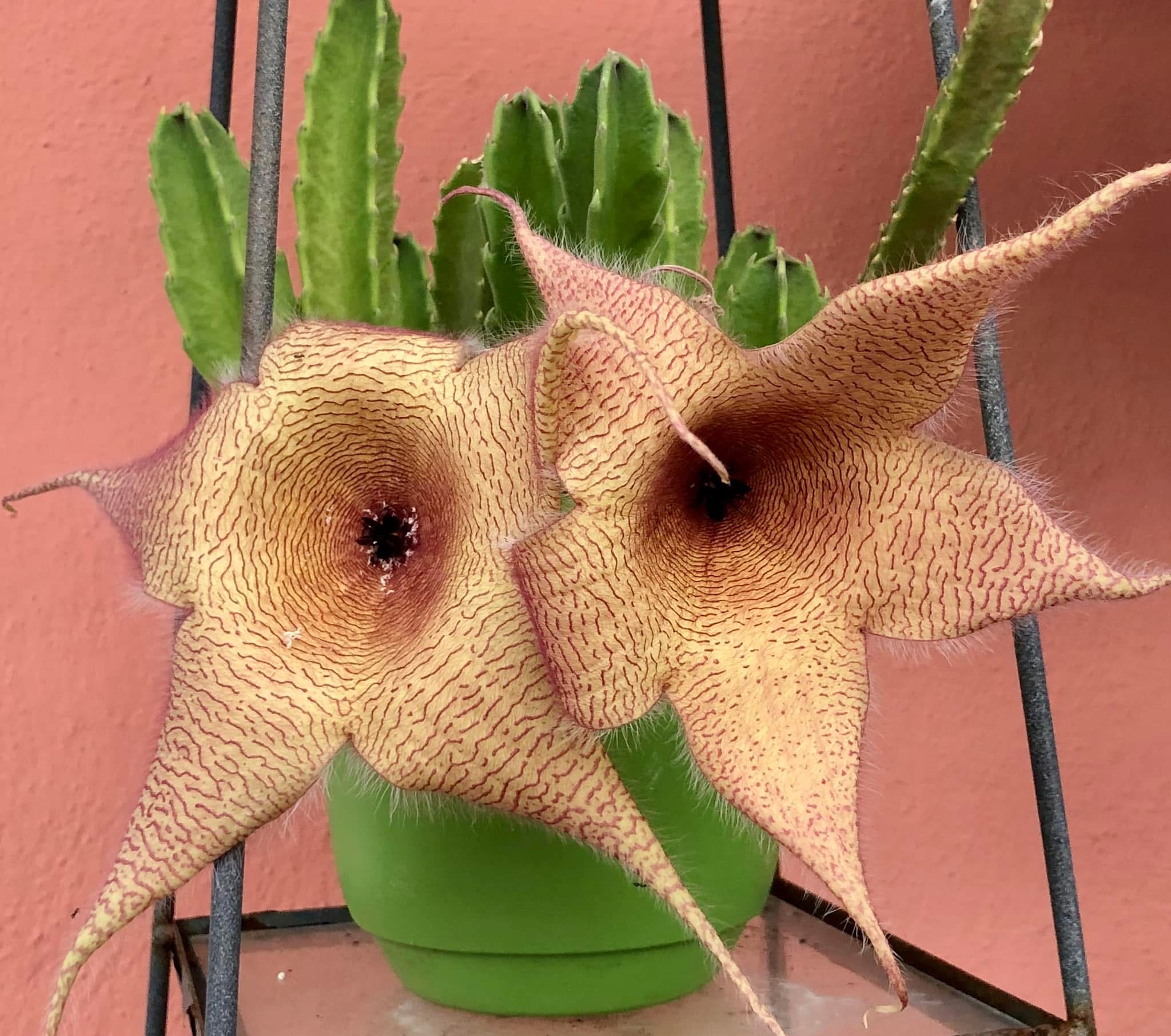
Starfish Cactus (Stapelia gigantea)
Starfish Cactus are named for their large, star-shaped flowers. Like all plants in the Stapelia genus, they are actually succulents, not cacti. The thick, fuzzy green stems have rough points along their edges, but no spikes or prickly thorns.
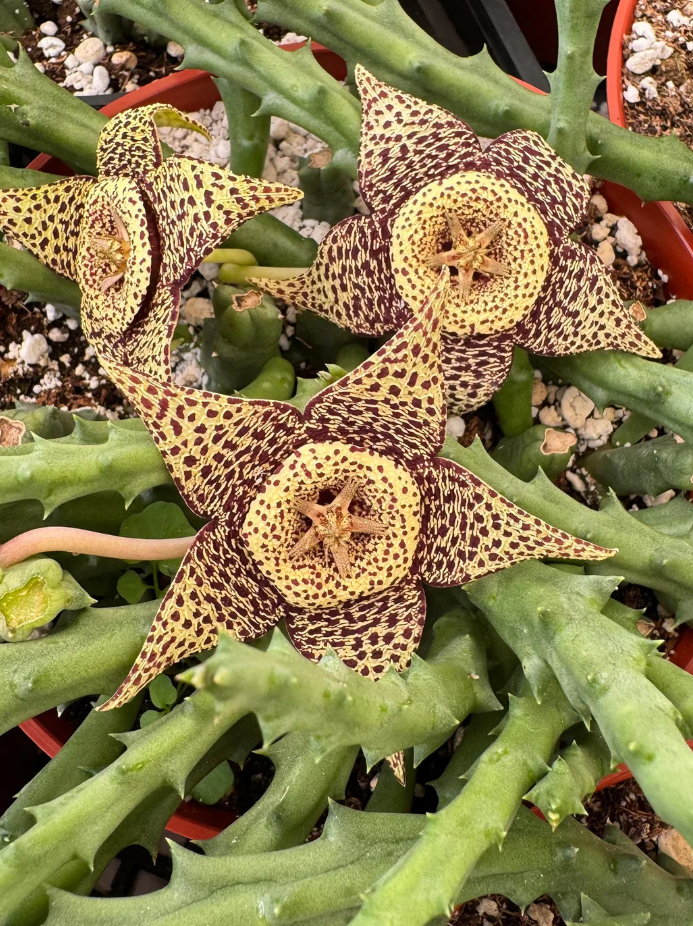
Starfish Flower Cactus (Stapelia orbea variegata)
This species is one of the most widely grown and easy-to-find Stapelia succulents. Its green stems are not as thick as those of other Stapelia varieties. Its flowers are smaller, too, but are vividly colored and last longer once opened.
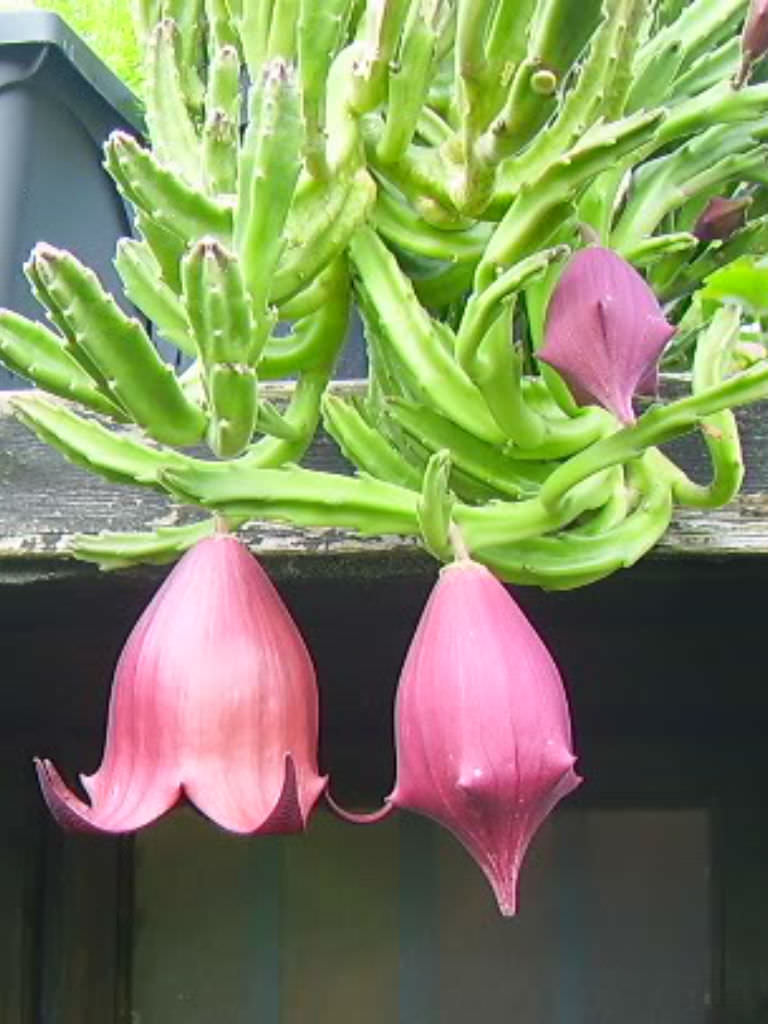
Blackbell Cactus (Stapelia leendertziae)
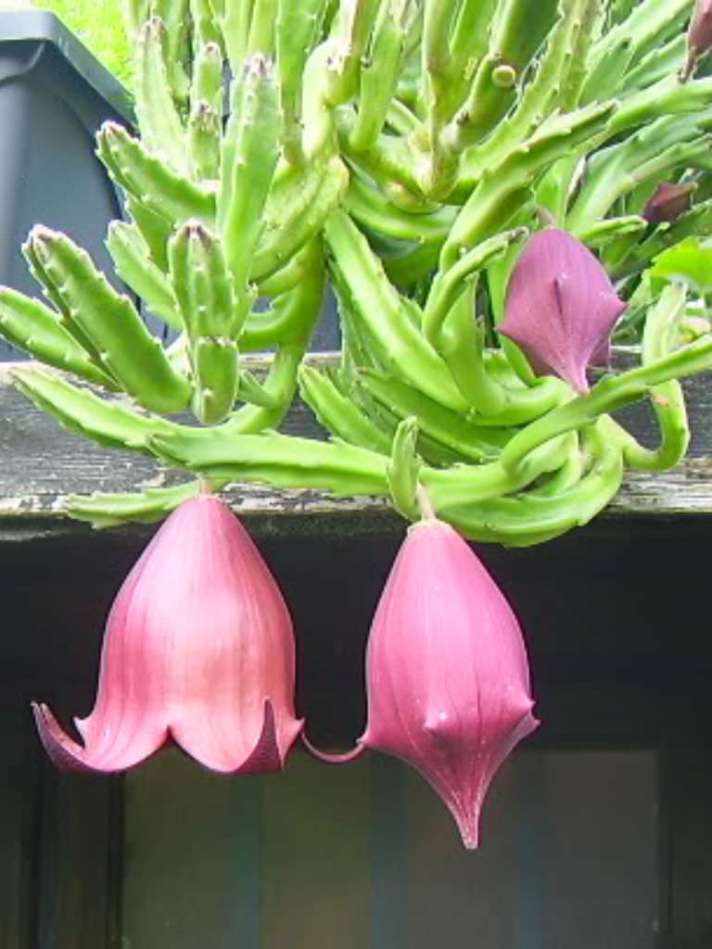
This species produces drooping, bell-shaped flowers coated in fine, velvety hairs. The blooms resemble the star-shaped flowers of their Stapelia cousins if the bell is turned to face you. They can measure up to 3 inches in length and are a deep maroon color that turns black as the flower wilts.
Caring for Stapelia Succulents
- Light: Stapelia thrive in bright, indirect light or partial sun. They can tolerate some direct sun, but full sun all day long will burn them. Select a spot with bright, filtered light and/or either morning or afternoon sun.
- Watering: Allow the soil to fully dry out between waterings. Overwatering can lead to black spots on the plant’s stems or limbs and eventually root rot. Its always better to err on the side of underwatering.
- Soil: Use a well-draining succulent or cactus mix that prevents water from pooling around the roots. Adding perlite or sand to the mix can help improve drainage. They can be planted directly in the ground if your soil is sandy.
- Temperature: Stapelia prefer warm conditions and do best in temperatures between 70-90°F. During the colder months, they should be kept above 50°F to avoid damage.
- Bring on the Blooms: To encourage flowering, ensure your Stapelia is receiving enough light and is slightly root-bound. These plants bloom more frequently when they’re slightly constrained in their pots. Use a low-nitrogen cactus fertilizer every 2-3 waterings in spring and summer.


